What Are the 5 Vegetables with Seeds?
Understanding Vegetables and Seeds
Do All Vegetables Have Seeds?
Let’s clear up a common confusion right away—do vegetables actually have seeds? The answer is both yes and no, depending on how you look at it. Many vegetables that we eat daily do contain seeds, but we don’t always notice them because they are small, soft, or blended into the edible part. Think about tomatoes or okra—those tiny seeds are right there, hiding in plain sight.
From a practical point of view, vegetables grown from flowering plants will produce seeds at some stage of their life cycle. These seeds are essential for reproduction, allowing plants to grow again and again. Some vegetables, like carrots or potatoes, don’t typically show seeds in the part we eat, but they still produce seeds if allowed to fully mature. So yes, seeds are more common in vegetables than most people think.
Botanical vs Culinary Classification
Here’s where things get a little tricky but interesting. Botanically speaking, anything that grows from a flower and contains seeds is considered a fruit. But in the kitchen, we don’t follow science—we follow taste and usage. That’s why tomatoes, cucumbers, and even peas are called vegetables in cooking.
This difference in classification explains why many “vegetables” actually have seeds. It’s not a mistake—it’s just two different ways of looking at the same plant. Once you understand this, it becomes much easier to identify which vegetables contain seeds and why.
Importance of Seeds in Vegetables
Role in Plant Reproduction
Seeds are the foundation of plant life. Without seeds, most vegetables wouldn’t exist. Each seed contains a tiny embryo, along with stored nutrients that help it grow into a new plant. When conditions like water, sunlight, and soil are right, the seed germinates and begins its life cycle.
Farmers and gardeners rely heavily on seeds to grow crops. Whether it’s a small home garden or a large agricultural field, seeds are the starting point. Vegetables like peas, coriander, and spinach are especially easy to grow from seeds, making them popular choices for beginners.
Nutritional Value of Seeds
Seeds are not just important for growing plants—they are also packed with nutrients. Many seeds contain protein, fiber, healthy fats, and essential vitamins. When you eat vegetables with seeds, you’re also benefiting from these nutrients.
For example, green peas are rich in plant-based protein, while coriander seeds are known for aiding digestion. Even small seeds, like those in tomatoes, contribute to overall nutrition. Including seeded vegetables in your diet can support better health and provide essential nutrients your body needs.
Top 5 Vegetables with Seeds
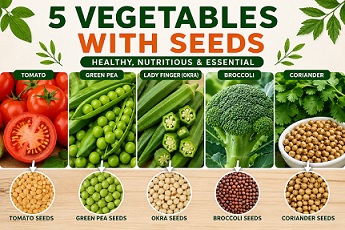
Now let’s focus on the main topic—five common vegetables that contain seeds and are widely used in everyday cooking.
1. Tomato Seeds
Features and Uses
Tomatoes are one of the most widely consumed vegetables around the world. If you slice one open, you’ll immediately see the seeds surrounded by juicy pulp. These seeds are soft, edible, and completely safe to eat.
Tomatoes are incredibly versatile. They are used in salads, curries, sauces, and even juices. The seeds also play a key role in growing new tomato plants, making them ideal for home gardening. If you’ve ever tried planting tomato seeds, you’ll know how easily they sprout under the right conditions.
2. Green Pea Seeds
Health Benefits
Green peas are a perfect example of a vegetable where the seed itself is the main edible part. When you eat peas, you’re actually eating the seeds inside the pod. This makes them unique compared to many other vegetables.
Peas are highly nutritious and rich in protein, fiber, and vitamins. They are also easy to cook and can be added to a variety of dishes. Whether you’re making a curry, soup, or rice dish, peas bring both flavor and nutrition to the table.
3. Lady Finger (Okra) Seeds
Unique Characteristics
Lady finger, also known as okra, contains small round seeds inside its long green pods. These seeds are completely edible and add a slightly crunchy texture to the vegetable.
Okra is commonly used in many cuisines, especially in Indian cooking. The seeds also release a natural thick substance when cooked, which helps in thickening curries and soups. This unique feature makes okra a favorite ingredient in many traditional dishes.
4. Broccoli Seeds
Nutritional Importance
Broccoli might not seem like a vegetable with seeds at first glance, but it does produce seeds when it flowers. These seeds are often used to grow new broccoli plants and are also consumed as sprouts.
Broccoli seeds are rich in antioxidants and beneficial compounds. They are often included in healthy diets because of their potential health benefits. Sprouted broccoli seeds, in particular, are considered highly nutritious and are commonly used in salads and sandwiches.
5. Coriander Seeds
Culinary Uses
Coriander is a unique plant because both its leaves and seeds are used in cooking. The seeds, often called “dhania,” are dried and used as a spice in many dishes.
Coriander seeds have a warm, slightly citrusy flavor that enhances the taste of food. They are commonly used in spice blends and curries. In addition to their flavor, they are also known for their digestive benefits, making them a valuable ingredient in traditional cooking.
Other Vegetables That Contain Seeds
Spinach Seeds
Spinach is usually grown from seeds, even though we mainly eat its leaves. These seeds are small but highly effective for cultivation and germinate quickly under the right conditions.
Lettuce Iceberg Seeds
Lettuce produces tiny seeds that are used for planting. These seeds are lightweight and can grow into fresh, crisp lettuce heads in a short time.
Baby Corn Seeds
Baby corn comes from maize plants, and the kernels are actually seeds. These are harvested early to create the tender baby corn we eat.
Tar Kakri Seeds
Tar Kakri, a type of cucumber, contains seeds similar to other cucumbers. These seeds are edible and also used for growing new plants.
Comparison Table of Seeded Vegetables
| Vegetable | Seed Location | Edible Seeds | Common Use |
|---|---|---|---|
| Tomato | Inside pulp | No | Salads, sauces |
| Green Pea | Inside pod | No | Curries, rice |
| Okra | Inside pod | No | Fry, curry |
| Broccoli | From flowers | No | Sprouts, salads |
| Coriander | Dry seeds | No | Spices |
How Seeds Develop in Vegetables
Pollination Process
Seed formation begins with pollination. This is the process where pollen from the male part of a flower reaches the female part. This can happen through wind, insects, or even manual methods.
Once pollination occurs, fertilization takes place, leading to the development of seeds. This is a natural process that ensures the continuation of plant species.
Seed Formation
After fertilization, the plant starts forming seeds inside fruits or pods. These seeds grow and mature over time until they are ready for harvesting. Different vegetables have different seed structures, which is why they look and feel different.
Benefits of Eating Seeded Vegetables
Eating vegetables with seeds offers multiple advantages. They are rich in nutrients, support digestion, and provide essential vitamins and minerals. Seeds also add texture and flavor to food, making meals more enjoyable.
Including seeded vegetables in your diet can help improve overall health. They are a natural source of energy and can be easily incorporated into daily meals.
How to Grow Vegetables from Seeds
Growing vegetables from seeds at home is simple and rewarding. Start by choosing good-quality seeds and planting them in nutrient-rich soil. Make sure they receive enough sunlight and water regularly.
Vegetables like coriander, spinach, and tomatoes are easy to grow and perfect for beginners. With a little care and patience, you can enjoy fresh, homegrown vegetables right from your garden.
Conclusion
Vegetables with seeds are more common than most people realize. From tomatoes and peas to okra and coriander, these vegetables play an important role in both nutrition and agriculture. Understanding how seeds work helps you appreciate your food and even grow your own vegetables at home. Once you start noticing seeds in vegetables, you’ll see them everywhere—it’s like discovering a hidden detail in something familiar.
FAQs
1. Are seeds in vegetables safe to eat?
No,
2. Which vegetable has edible seeds?
Tomatoes, peas, okra, and cucumbers all have edible seeds.
3. Can I grow vegetables from kitchen seeds?
Yes, many seeds like tomato and coriander can be used for home gardening.
4. Why do some vegetables not show seeds?
Some vegetables store seeds in parts we don’t usually eat or harvest early.
5. Which is the easiest seeded vegetable to grow?
Coriander and spinach are among the easiest to grow from seeds.